- Just starting out / casual: Your smartphone — genuinely capable for many situations, always in your pocket
- Best budget dedicated camera: Olympus E-M10 Mark III (~$340) with a macro lens
- Best value with full stacking: Olympus OM-D E-M1 Mark II (used ~$300–400)
- Best overall: OM System OM-1 Mark II — the complete package for serious fungi photography
Starting with your phone
For a lot of people, a smartphone is genuinely the right answer — at least to start. Modern flagship phones have impressive cameras, and for documenting your finds, sharing to iNaturalist, or posting to Instagram, a phone gets the job done without any extra gear to carry. The convenience factor is real: it is always in your pocket, it is fast to set up, and you do not need to think about lenses, settings, or tripods to get a usable shot.
I started with a phone myself, and some of those early shots actually came out surprisingly well — particularly for larger, well-lit specimens in good natural light. A phone can also outperform a DSLR with a kit lens for close-up work, since modern phone cameras are optimised for close focusing in a way that a standard zoom lens simply is not.
The limitations become obvious fairly quickly though, particularly for macro photography. Most phones struggle with very small mushrooms — anything under about 2 to 3 cm becomes difficult to resolve in real detail. Low light performance on a phone, even a good one, degrades quickly in the dark forest conditions where many of the most interesting fungi grow. And focus stacking, the technique that takes mushroom photography to the next level, is essentially not practical on a phone. The results are a fraction of what a dedicated camera and macro lens can achieve.
If you want to get the most out of your phone for mushroom photography before making any investment in dedicated gear, the phone mushroom photography guide covers techniques, lighting tricks, and the black background method that can produce genuinely striking results.
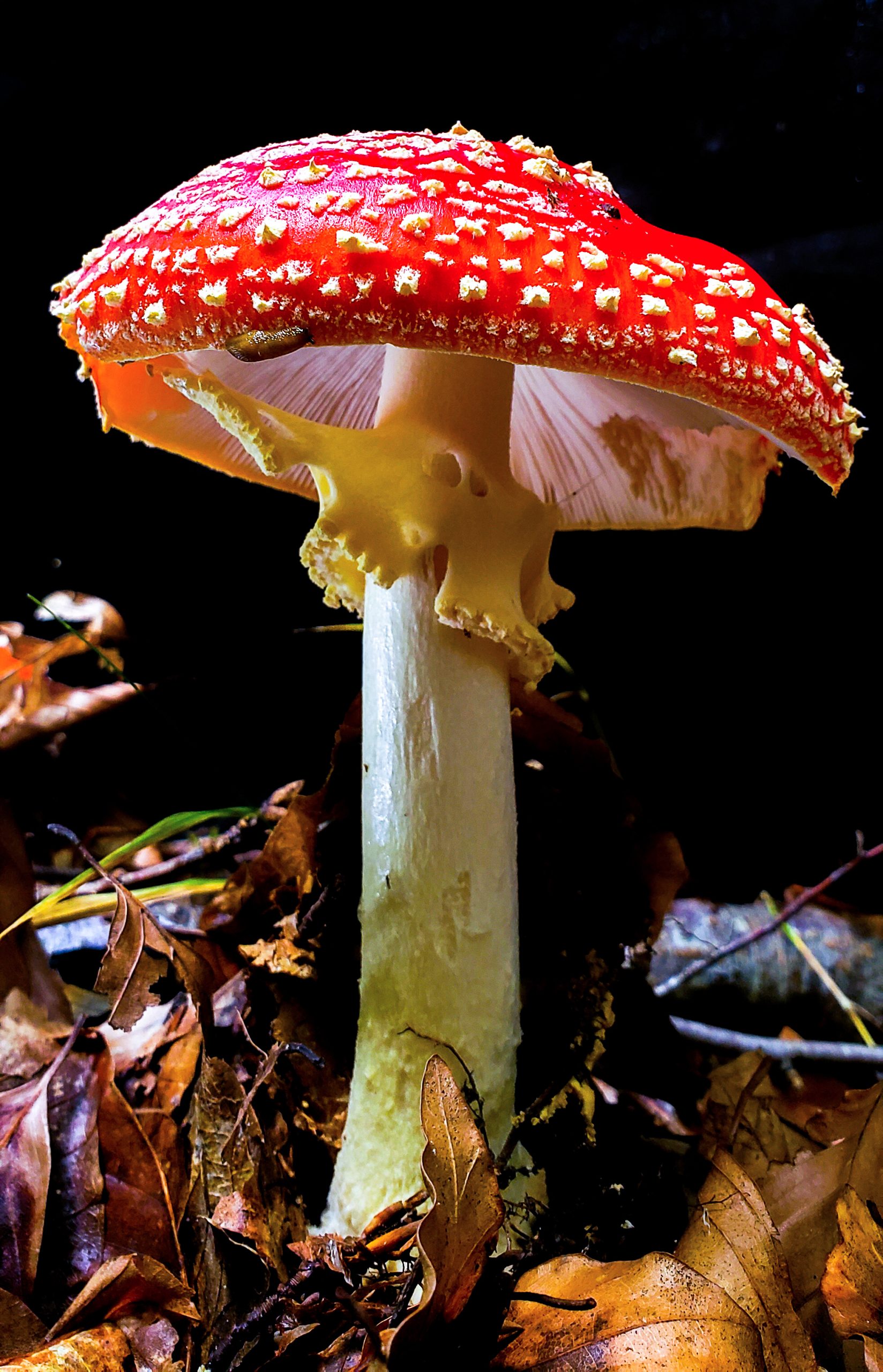
Any DSLR or mirrorless will work — but you need a macro lens
If you already own a DSLR or mirrorless camera, good news: it will almost certainly produce better mushroom photographs than your phone, as long as you pair it with the right lens. The camera body itself matters less than you might think at this stage. A five-year-old entry-level mirrorless with a dedicated macro lens will outperform the latest flagship camera body with a kit zoom for close-up fungi photography every single time.
The reason is simple. Most photogenic mushrooms are relatively small — often just a few centimetres tall or less. A standard kit lens or zoom simply cannot focus close enough to fill the frame with a small subject, which means you end up with a small mushroom in the middle of a wide shot with no detail visible. A dedicated macro lens changes this entirely. It is designed to focus at very close distances and achieve 1:1 magnification — meaning the subject appears life-size on the sensor — which is what you need to properly photograph small fungi.
So if you already have a camera and are wondering what to buy: get a macro lens first, before upgrading the body. It will make a bigger difference to your mushroom photography than any camera upgrade.
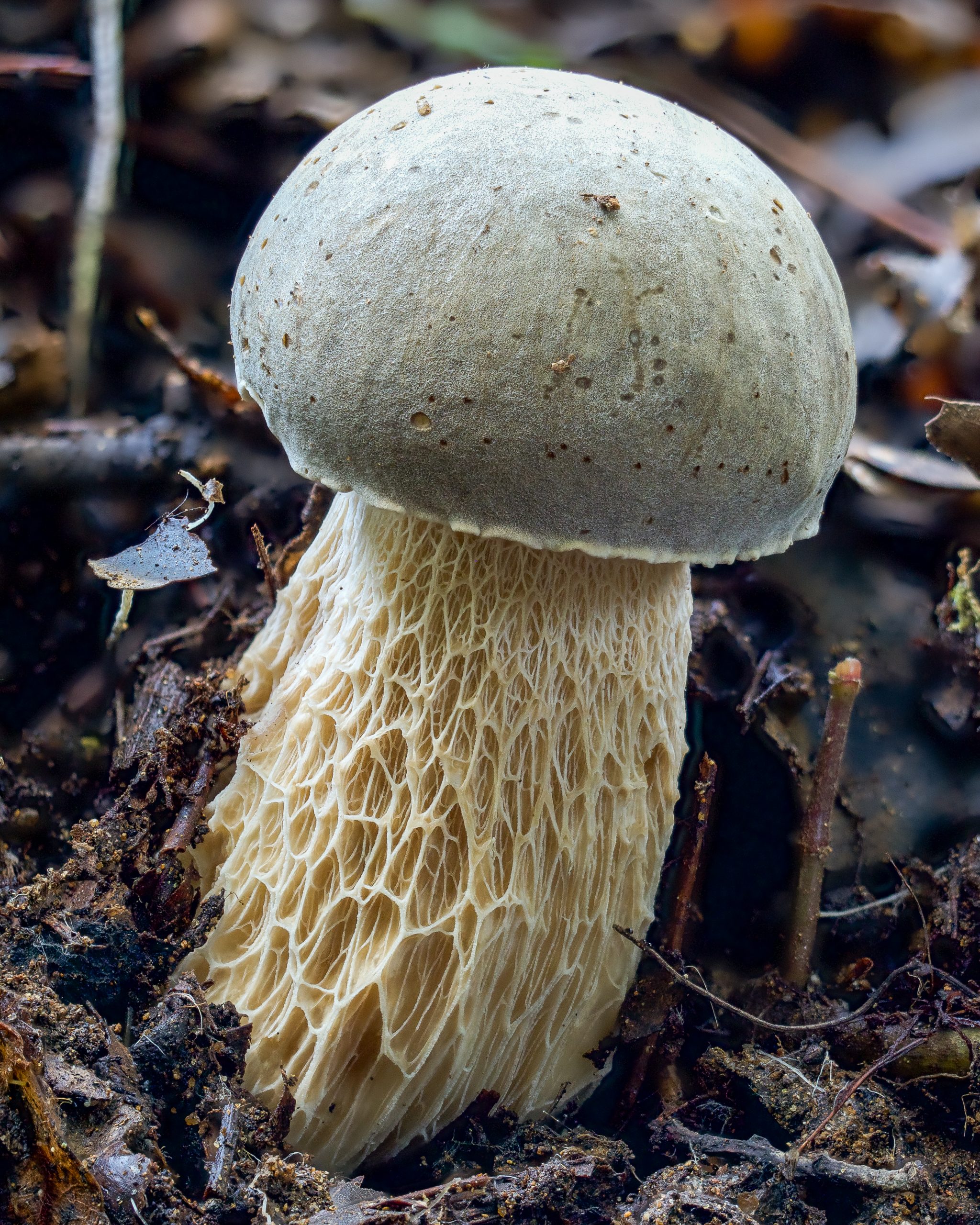
Why I recommend Olympus for mushroom photography
When it comes to choosing a camera system specifically for fungi photography, I consistently recommend the Olympus (now OM System) lineup, and I want to explain exactly why rather than just asserting it.
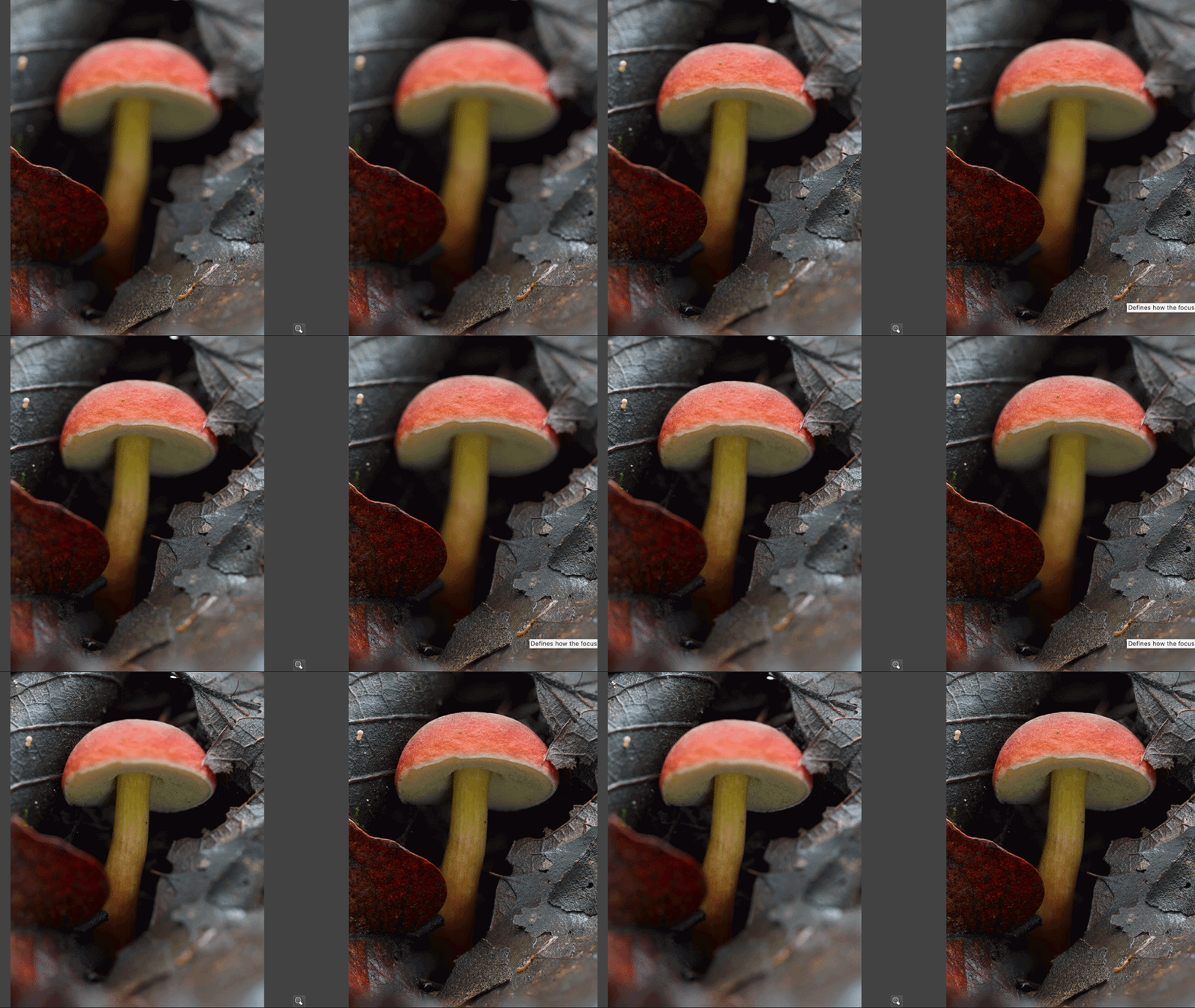
In-camera focus stacking is the biggest reason. Focus stacking is the technique that transforms decent mushroom photography into exceptional mushroom photography — it solves the depth of field problem at macro distances by blending multiple frames into one fully sharp image. Olympus cameras have had the best in-camera automated focus bracketing and stacking of any camera system for years, and that remains true today. The camera fires the full sequence automatically, which means less wind interference between frames and less time spent managing the process manually in the field.
The Micro Four Thirds sensor format is actually an advantage for macro work. The 2x crop factor compared to full-frame effectively doubles your depth of field per frame, which means fewer frames needed per stack and faster processing afterward. The system is also more compact and lighter than full-frame, which matters on long forest walks. The Micro Four Thirds explainer covers the trade-offs in full if you want to dig into the detail.
Weather sealing on the mid and upper Olympus models is excellent. Forest photography means damp conditions, morning dew, light rain, and muddy ground. A weather sealed camera handles all of this without stress, which means you can focus on the photography rather than worrying about the gear.
The M.Zuiko 60mm f/2.8 Macro is one of the finest macro lenses available for any camera system, and it is native to this platform. Sharp, weather sealed, and with generous working distance between the front element and the subject — which matters for lighting and for not disturbing delicate specimens.
That said, if you are already deeply invested in another system — Nikon, Canon, Sony, Fujifilm — those cameras all produce excellent mushroom photographs too. I would not tell someone to switch systems just for this. The Olympus recommendation is strongest for someone starting fresh or looking for the best purpose-built option.
My recommendations
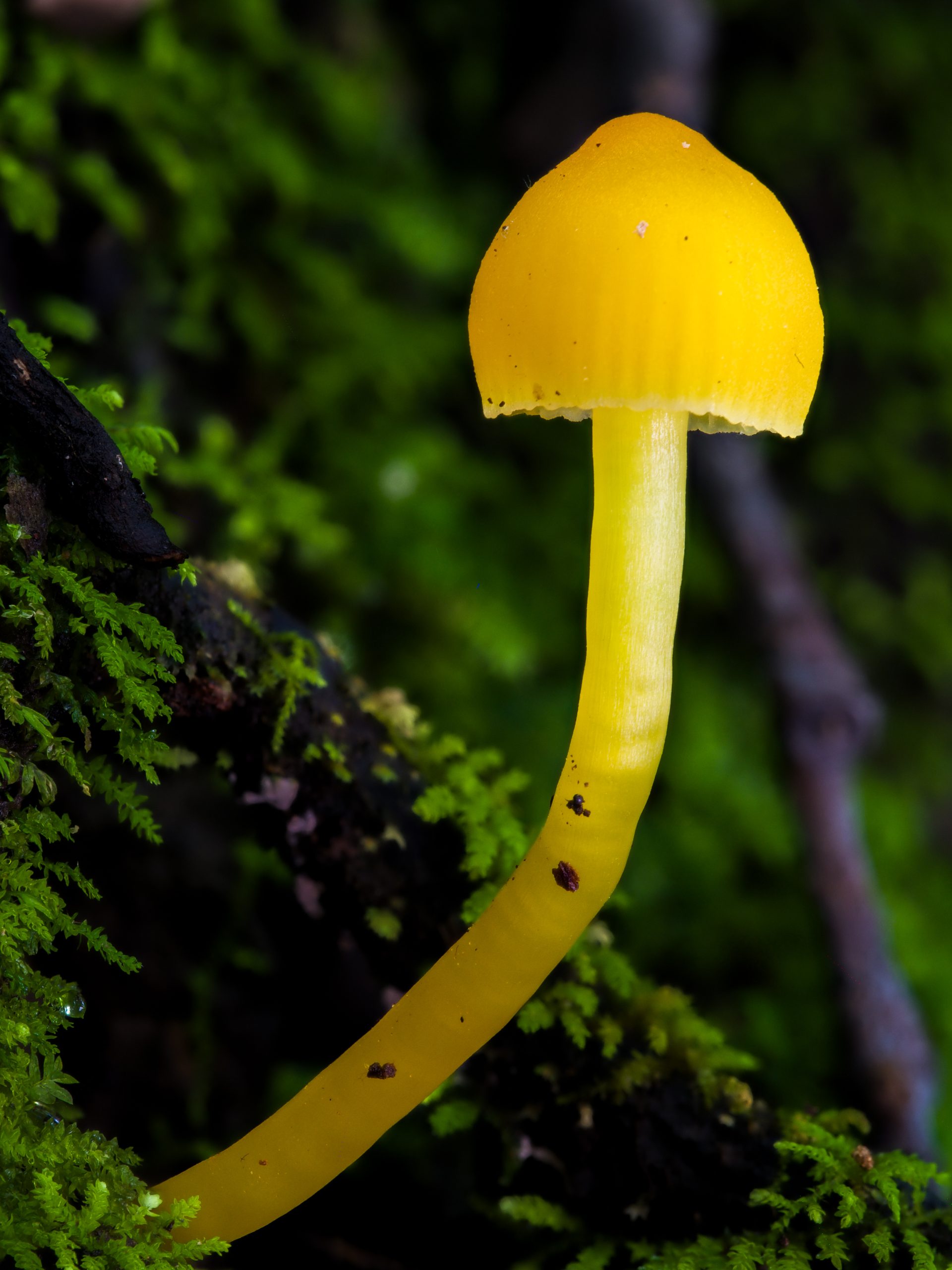
Your Smartphone
The camera you already have in your pocket. Genuinely capable for documentation, social sharing, and larger specimens in good light. Fast, convenient, and always with you. Limited for small subjects at close range and essentially not suitable for serious focus stacking work. A great starting point before committing to dedicated gear. The phone mushroom photography guide will help you get the most out of it.
✓ Always with you ✓ Fast and convenient ✓ No extra cost ✓ Good for documentation and social media
✗ Limited close-up capability ✗ Struggles in low forest light ✗ Not suitable for focus stacking ✗ Limited for very small subjects
Olympus E-M10 Mark III
The most affordable entry point into the Olympus system. At around $340 new it supports in-camera focus bracketing — the camera automatically captures a sequence of frames at different focus points which you then merge in software. No in-camera stacking and no weather sealing, but for someone just getting into dedicated mushroom photography with a tight budget, this is a solid and capable starting point. Pair it with the M.Zuiko 60mm f/2.8 Macro and you have a genuinely capable fungi photography setup.
✓ Lowest price on this list ✓ Focus bracketing ✓ Lightweight and compact ✓ Full MFT lens compatibility
✗ No in-camera stacking ✗ No weather sealing ✗ Older autofocus system
More InfoOlympus OM-D E-M1 Mark II (used)
If you are willing to buy used, the E-M1 Mark II is the best value camera on this entire list. Full in-camera focus stacking, IP53 weather sealing, a 20MP sensor, and a significantly better autofocus system than the budget options. Available used for $300 to $400 — sometimes less than the new price of the E-M10 Mark III, with meaningfully better specs across the board including in-camera stacking and weather sealing. This is the one I would recommend to most people who are comfortable buying secondhand. The used gear buying guide covers what to check before buying secondhand.
✓ Full in-camera stacking ✓ Weather sealed ✓ 20MP sensor ✓ Excellent value used ✓ Better AF than budget options
✗ Must buy used for best price ✗ Older model, no manufacturer warranty
More InfoOlympus OM-D E-M5 Mark II
If you want full in-camera focus stacking in a new camera at the lowest possible price, the E-M5 Mark II is the answer at around $415. IP52 weather sealing, full stacking capability, and the same Micro Four Thirds lens mount as every other Olympus on this list. The trade-offs are a 16MP sensor and an older autofocus system, neither of which matters significantly for tripod-based macro work where you are setting up carefully anyway.
✓ Full in-camera stacking ✓ Weather sealed ✓ Lowest new price with stacking ✓ Full MFT lens compatibility
✗ 16MP sensor ✗ Older autofocus ✗ Lower high-ISO performance
More InfoOM System OM-1 Mark II
The current flagship of the OM System lineup and the camera I would choose for serious mushroom photography without compromise. Full in-camera focus bracketing and stacking, IP53 weather sealing, a 20MP stacked BSI sensor with excellent high-ISO performance, and 8.5 stops of in-body stabilisation. The stacked sensor fires bracketing sequences fast enough to minimise wind interference between frames, which matters enormously when you need 50 to 100 frames for a slime mold or small Mycena stack. Beyond macro specifically, it is also one of the best nature cameras available for insects, wildlife, and general outdoor photography. A complete package.
✓ Full in-camera stacking ✓ Best-in-class weather sealing ✓ Fast bracketing sequence ✓ Outstanding stabilisation ✓ Excellent for all nature photography
✗ Premium price ✗ Micro Four Thirds sensor (smaller than full-frame)
OM-1 Mark II (body only) OM-1 Mark II with kit lensDo not overlook the lens
Whatever camera you choose, the lens is equally important — arguably more so. For mushroom photography specifically, a dedicated macro lens that achieves 1:1 magnification is essential for photographing small and medium-sized specimens properly. Without one you are limited to larger mushrooms, and many of the most interesting species are small.
For Olympus and OM System cameras, the M.Zuiko 60mm f/2.8 Macro is the clear choice — optically exceptional, weather sealed, and widely regarded as one of the finest macro lenses for any system. For other camera systems, the macro lenses guide covers the best options for Nikon, Canon, Sony, and Fujifilm.
A tripod that can get low is also essential for serious macro work — mushrooms grow at ground level and focus stacking requires a completely still camera between frames. And once you have the basics sorted, extension tubes and the Raynox DCR-250 are the next step for pushing magnification further on very small subjects.
FAQ
Do I need a special camera just for mushroom photography?
No. Most modern mirrorless or DSLR cameras will produce good results with the right lens. The camera matters less than the lens at entry level. That said, certain features — particularly in-camera focus bracketing and weather sealing — make a real practical difference for serious work.
Is my phone good enough?
For casual documentation and social media, yes. For serious close-up photography of small species, the limitations become frustrating quickly. A phone is a great starting point and is always better than no camera at all.
Why do you recommend Olympus over other brands?
Primarily because of in-camera focus stacking, the Micro Four Thirds format advantages for macro work, and the exceptional M.Zuiko 60mm macro lens. If you are already in another system, stay there and invest in a macro lens — the brand matters less than the technique.
What is focus stacking and do I need it?
Focus stacking is the technique of blending multiple photos taken at different focus points into one fully sharp image. At macro distances the depth of field is so shallow that it is the only way to get an entire small mushroom sharp from front to back. You do not need it for casual photography, but it is what separates good mushroom photography from exceptional mushroom photography. The focus stacking explainer covers everything from scratch.
What is the cheapest camera that supports focus stacking?
The Olympus E-M10 Mark III at around $340 supports focus bracketing. The OM-D E-M5 Mark II at around $415 supports full in-camera stacking. Buying a used OM-D E-M1 Mark II for $300 to $400 gives you full stacking and weather sealing at a similar price. The complete cameras guide lists every camera with these features across all brands and budgets.
Best of luck out there — and enjoy the hunt.