A practical guide to choosing a tripod for mushroom and macro nature photography, from my own experience in the field. What features actually matter, what to look out for, and four options across budget, mid-range, and premium.
Contents
- Why a tripod matters for mushroom photography
- What to look for when choosing a tripod
- My recommendations
- Tips for using a tripod in the field
Why a tripod matters for mushroom photography
Tripods. They can be bulky, tedious, and take a lot of time to set up. This is especially true when you are out in the field, covering ground, and finding all sorts of interesting things to photograph. They are by no means convenient. But they are a game-changing tool when it comes to getting the best possible images out of your camera.
The complete stillness a tripod provides has a lot of benefits. You can keep your ISO low to avoid noise, do clean focus bracketing, and have complete control over your aperture. For macro photography specifically, the stillness is essential because the small field of view is extremely sensitive to any movement at all. That said, you can absolutely get amazing shots without a tripod. It does limit you though, particularly when doing macro work or shooting in low light conditions, which covers a good portion of the best mushroom photography situations out there.
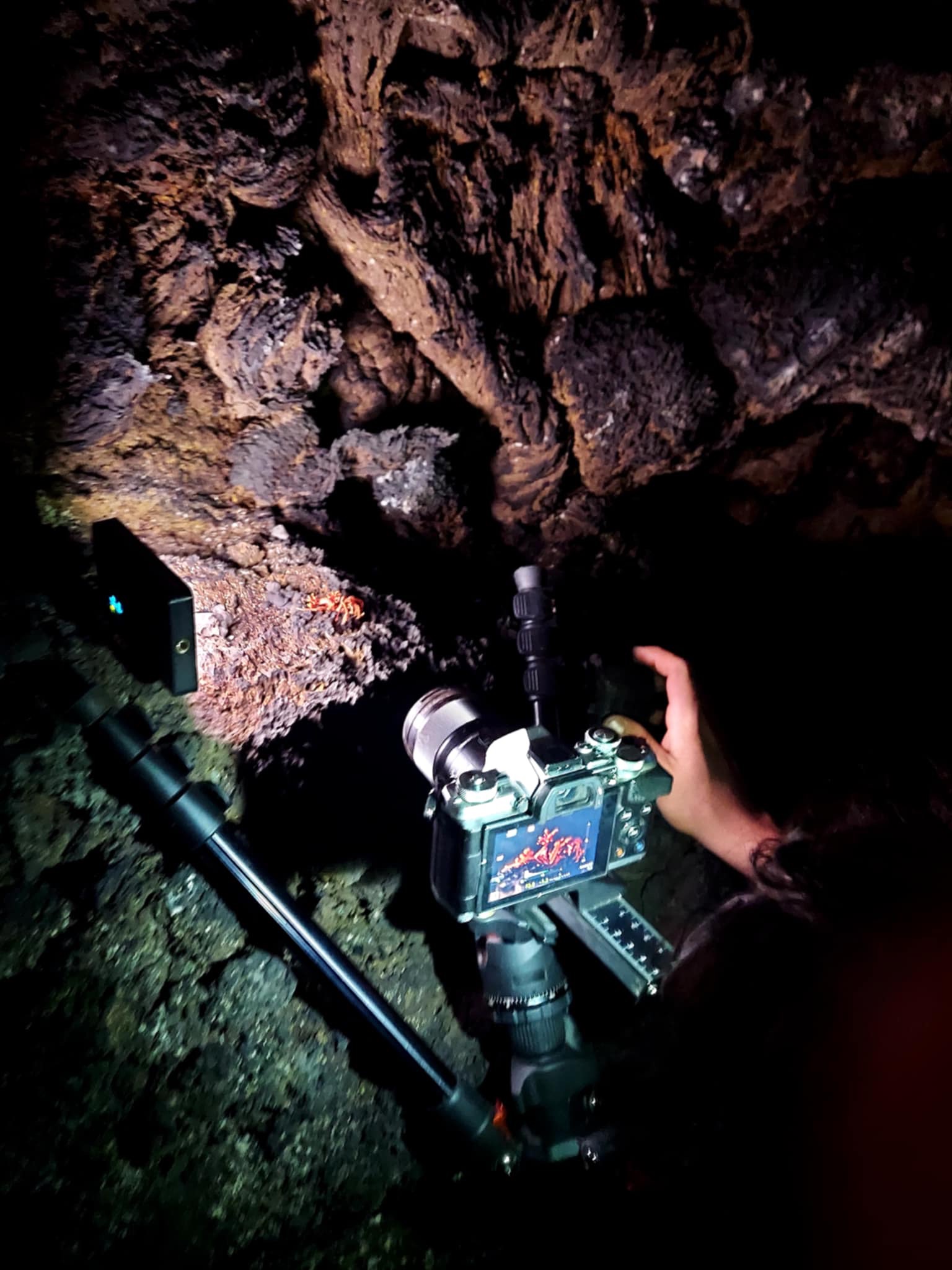
Before I got into focus stacking, my macro technique relied on a small aperture to increase depth of field. This requires a long exposure, so the tripod was essential. And while focus stacking uses a wider aperture to avoid diffraction, it still requires stillness because of the time between individual frames in the sequence. Either way, you need the camera locked down.
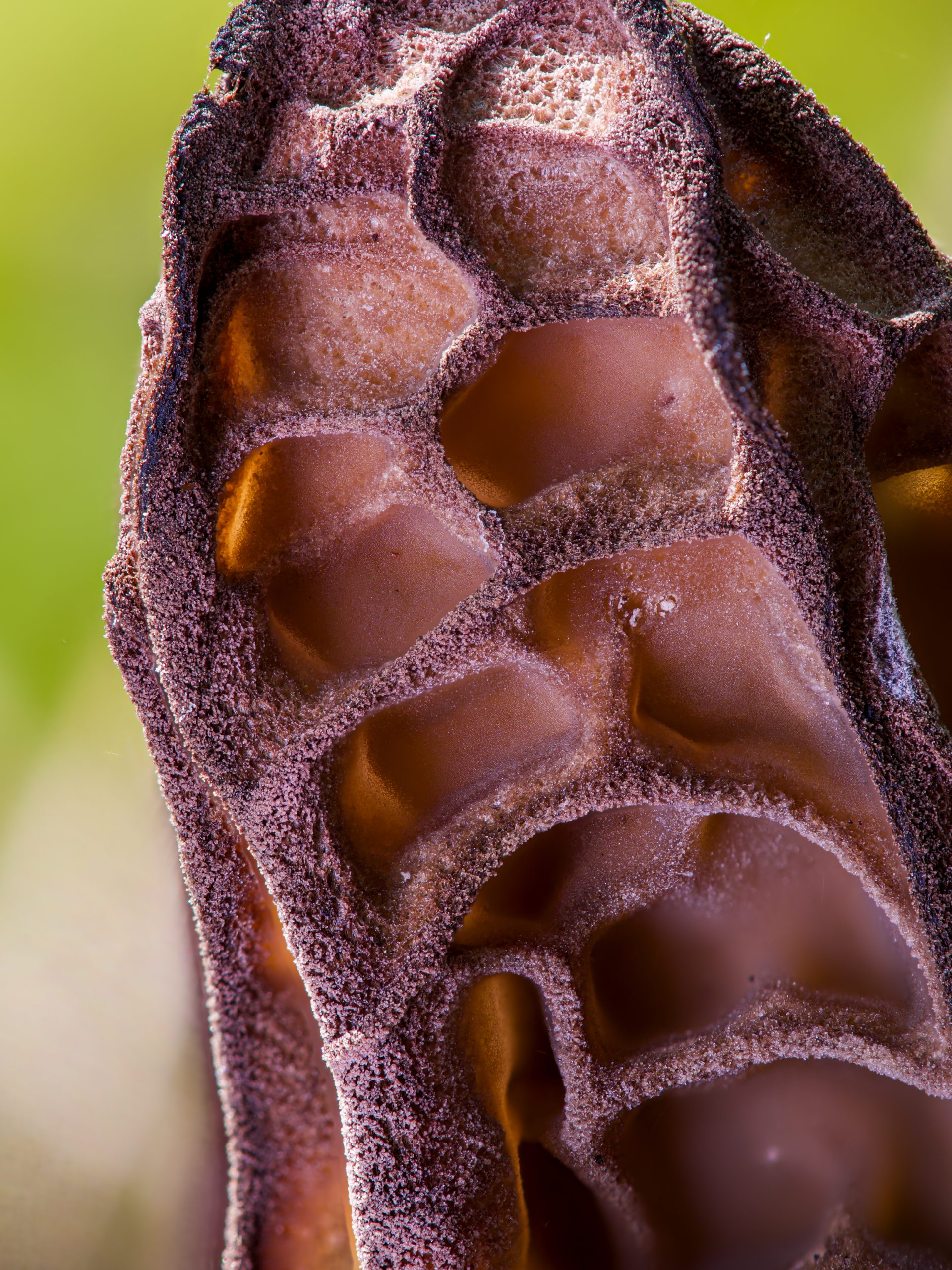
I also want to mention two alternatives to a full tripod that I actually use in the field. The first is a bean bag. Mine is literally a plastic bag filled with popcorn kernels inside a sock. It costs nothing, packs flat, and for very low ground-level shots on a flat surface it is genuinely hard to beat. When I want to get really close to the ground and conditions allow it, I just rest the camera directly on the bean bag and use a remote shutter release. Simple and effective.
The second is a Joby GorillaPod, which I also use regularly. It is small and portable with flexible legs that can technically wrap around branches and uneven surfaces. It is honestly not ideal for serious macro photography since it is limited in height and not stable enough for demanding focus stacks. But for a good percentage of casual shots it does the job, and you can carry it in a jacket pocket. It starts to fall short when mushrooms are growing from a steep bank, when you want a higher viewpoint for larger subjects, or for taxonomic layouts with multiple specimens.
What to look for when choosing a tripod for macro photography
The most important specification for mushroom photography is minimum height, not maximum height. Mushrooms grow at ground level and you need your camera at the same level as your subject. Look for independently spreadable legs that can splay wide, ideally near-horizontal, and a removable or reversible center column. A tripod that cannot get low without awkward workarounds will frustrate you constantly in the field.
Beyond that, weight and stability are the main trade-off. Carbon fiber dampens vibration better than aluminum and is lighter to carry on long forest walks, but costs more. For most field photographers a carbon fiber travel tripod in the 1.2 to 1.6kg range is the sweet spot. Ball heads are standard and work well for macro work. Avoid extending the center column more than halfway as it shifts the center of gravity upward and reduces stability significantly. And whatever tripod you use, always fire the shutter with a remote release or self-timer rather than pressing the button directly.
Wind is the real enemy: No travel tripod gives you perfect stacks in windy conditions. The practical answer is to shoot early in the morning when the air tends to be still, not to buy a heavier tripod.
My recommendations
Joby GorillaPod
Compact option
A useful field companion for opportunistic shots when carrying a full tripod is not practical. The flexible legs are genuinely handy for low and awkward angles, and it fits in a jacket pocket. Not stable enough for serious focus stacking or demanding macro work, but for quick casual shots it does a solid job. Available in several sizes so make sure you get one rated for your camera and lens weight.More Info
K&F Concept Lightweight Aluminum Tripod
Budget pick
This was my first proper tripod and honestly it served me reasonably well for the price. It is aluminum rather than carbon fiber which makes it a bit heavier, but it is versatile, fits easily into most backpacks, and is not too heavy to carry. I remember seeing a review calling it the worst tripod on the planet which I think is a bit harsh. What do you expect from a budget tripod? For the price it is really not too bad at all.
One downside worth knowing: the center column is not removable, which limits how low you can bring the camera. It is however reversible, meaning you can flip it so the camera hangs down between the legs. It is a bit cumbersome but it does work and can get you surprisingly close to the ground. If budget is the main constraint, this is a solid starting point.More Info
Sirui Traveler 5CX Carbon Fiber Tripod
My current pick
This is the tripod I use now and the one I would recommend to most mushroom photographers looking to spend sensibly without cutting corners. It has a removable center column which solves the low angle problem properly, and is also capable of reaching a comfortable working height for standard shots. It is lightweight, compact, and very sturdy for a travel tripod. Genuinely the only tripod I feel like I need now.
The one limitation to know about is that the maximum height with the center column extended is around 1.3 metres (52 inches), roughly chest height. For mushroom photography that is plenty since you almost never need to shoot higher than that. But if you plan to use the same tripod for video or general photography where you want eye-level height, it could feel limiting.More Info
Manfrotto Befree Advanced
Premium pick
I have not personally used the Manfrotto Befree Advanced, but it has consistently come up in my research as one of the best travel tripods available for nature photography and I feel comfortable recommending it. Manfrotto is one of the most trusted names in the industry, and the Befree Advanced is their flagship travel option. It is very well built, comes with an excellent ball head that includes a friction control knob, and the overall build quality is noticeably better than budget options. Available in aluminum and carbon fiber versions. For photographers who want a tripod that will last many years and handle demanding field conditions, this is the one to look at.More Info
Tips for using a tripod for mushroom photography
Spread the legs as wide as you need rather than raising the center column. Lower center of gravity means less vibration and more stability, especially on uneven forest ground.
On soft ground like wet soil or leaf litter, the tripod feet can slowly sink between frames of a focus stack. Rubber feet work better than spiked feet in these conditions. Some photographers carry a small flat piece of rubber mat to set the feet on in very soft ground.
Hang your camera bag from the center column hook if your tripod has one. The added weight at the center lowers the center of gravity and meaningfully improves stability in breezy conditions.
Always wait a moment after positioning the tripod before firing your first frame. The act of placing the tripod and adjusting the legs introduces vibration that takes a second or two to settle. This matters much more at high magnification.
If you are using a focusing rail for manual focus stacking, make sure it is mounted securely and that you are turning the knob slowly and smoothly. A cheap or poorly mounted rail is the most common cause of stack failures even on a good tripod.
For the camera and lens side of the setup, the guides on macro lenses for mushroom photography and cameras with focus stacking capability cover what pairs well with a solid tripod. And if you are pushing magnification further with accessories, the article on extension tubes and the Raynox DCR-250 explains why stability becomes even more critical at higher magnification levels.
Best of luck out there.
This article contains affiliate links to Amazon. I may earn a small commission if you purchase through them, at no extra cost to you.
No responses yet